The Ultimate Guide to Bear Viewing: From Grizzlies to Polar Giants
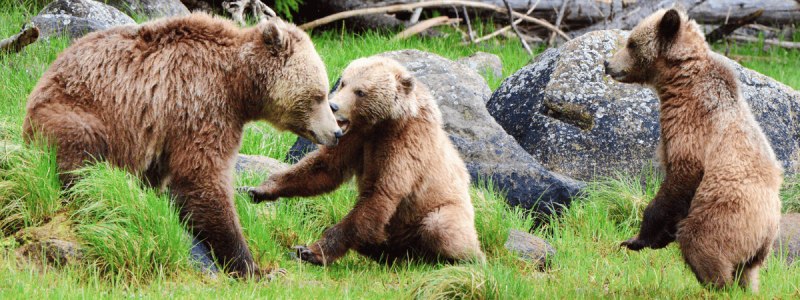
Canada is bear country—vast, wild, and brimming with opportunities to witness these magnificent creatures in their natural habitats. But what types of bears roam these landscapes, where and when is the best time to see them, and how can we view them responsibly? From the misty coastal rainforests of British Columbia to the icy expanses of Hudson Bay, let’s delve into the heart of bear territory.
What is the Bear Population in Canada?
What Types of Bears Will I See in Canada?
Where to Find Bears in Canada?
When is the Best Time to See Bears in Canada?
What to Pack for Bear-Watching Adventures?
How to Stay Safe When Viewing Bears?
How can we be Respectful to Indigenous Communities?
What is the Bear Population in Canada?
Of Canada’s thriving bear population, Black bears are the most numerous, with estimates suggesting there are currently up to 600,000 across North America, and more than 380,000 residing within the provinces and territories of the Great White North. Primarily found in British Columbia, Grizzly bears number approximately 27,000, while in the Canadian Arctic, around 16,000 polar bears roam the wilds, representing roughly two-thirds of the global polar bear population.
What Types of Bears Will I See in Canada?
Canada is home to three species of bear—each with its own personality and preferred postcode:
Grizzly Bears
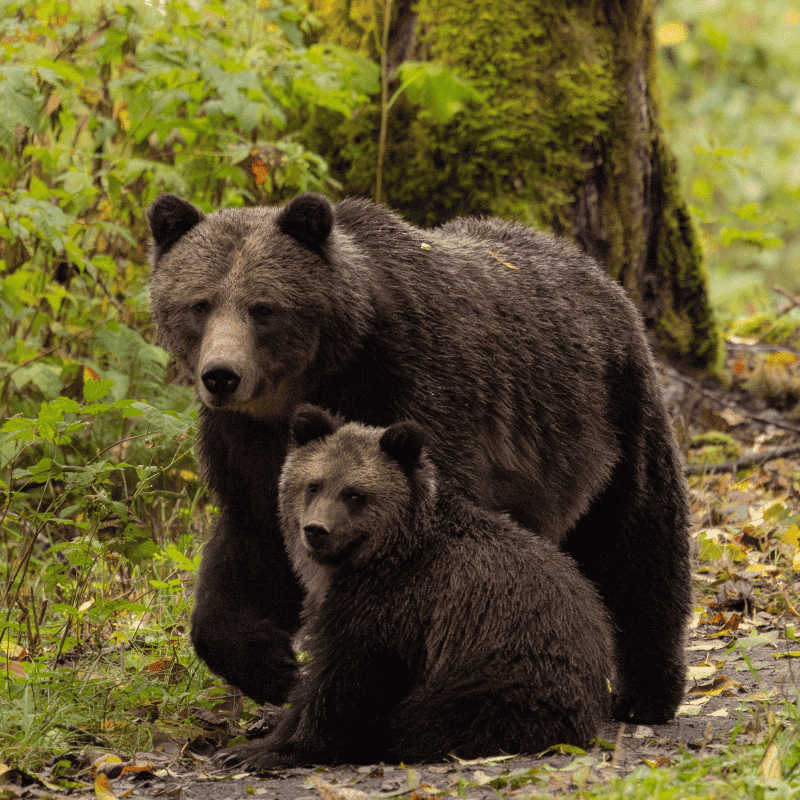
Grizzly bears, the rugged celebrities of the Canadian wilderness, are known for their distinctive shoulder humps and impressive size. They roam the west, particularly British Columbia and the Rockies.
These solitary creatures are omnivorous, with diets ranging from berries and roots to fish and small mammals. Grizzlies are typically active from spring through autumn, entering hibernation during the winter months. While you are in the wild, listen out for their vocalisations, including the growls, roars, and huffs, which they use to communicate.
Black Bears
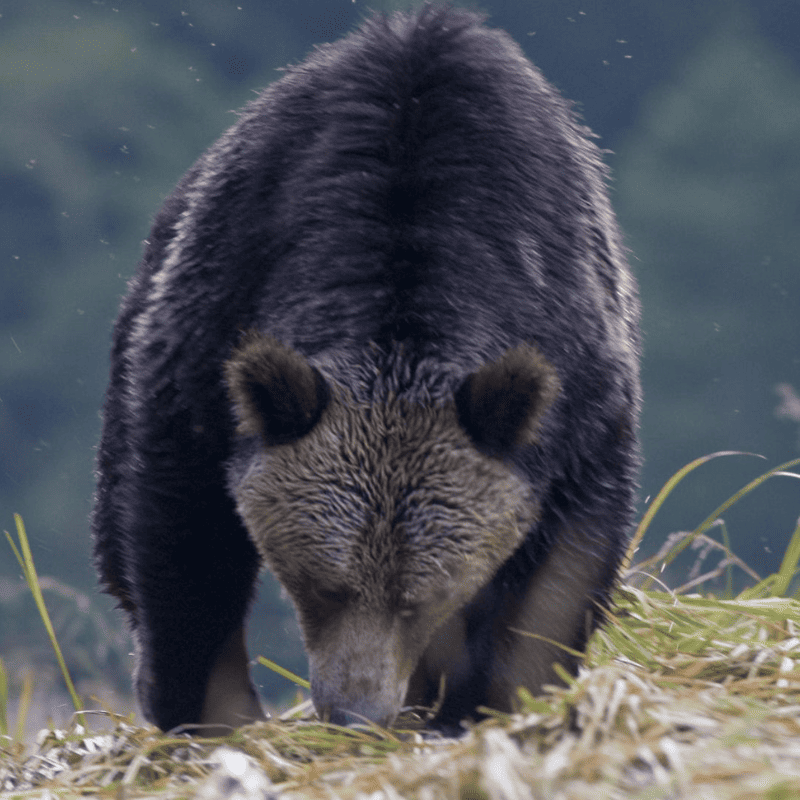
Black bears, the most widespread in Canada, might not be as imposing as grizzlies, but they’re just as captivating. Despite their name, their fur can vary from black to brown or it might even have cinnamon hues. Smaller than grizzlies they are incredibly agile and are known for their climbing abilities so keep your eyes peeled for some bear action.
Spirit Bears
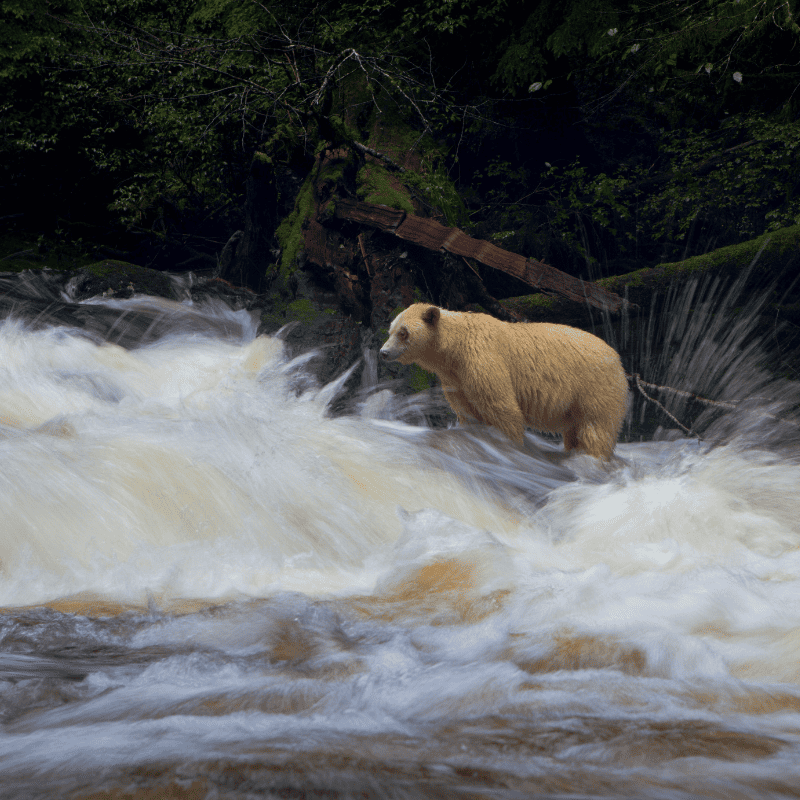
Kermode bears or Spirit bears (the name given to them by Canada’s Indigenous peoples) are a subspecies of the black bear with a unique recessive gene that gives them a cream or white coat. While their colouring makes them more effective hunters, they are rarely sighted, with an estimated total of only 400 spirit bears existing in the world today.
As detailed by the First Nations in IFL science, these folkloric Spirit bears have their own fascinating story too: “The creator Raven wanted to remind the Kitasoo Xai’xais Peoples of a time when this land was covered in ice, so he decided to turn one in ten black bears white. The white bear reminds us to be thankful for the lush and bountiful land of today.”
Polar Bears
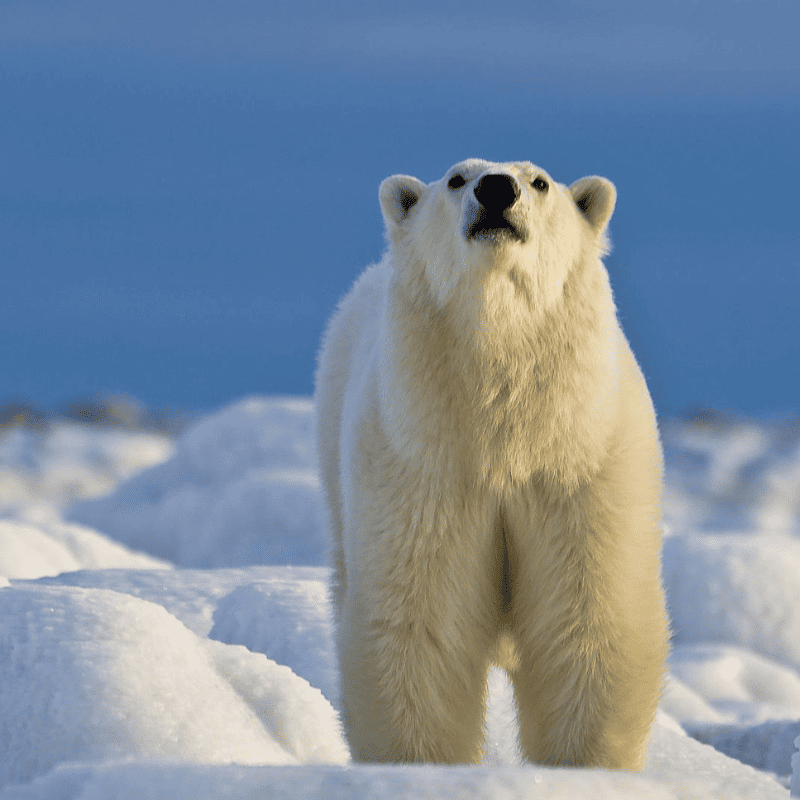
The Canadian Arctic’s majestic rulers, Polar bears patrol the tundras and sea ice. The world’s largest land carnivores, males can weigh up to 700 kilograms. Well-adapted to cold environments, with thick blubber and dense fur, they feed primarily on seals, relying on sea ice as a platform for hunting.
While they do not hibernate in the traditional sense; pregnant females will den during the harshest winter months.
Kodiak Brown Bear
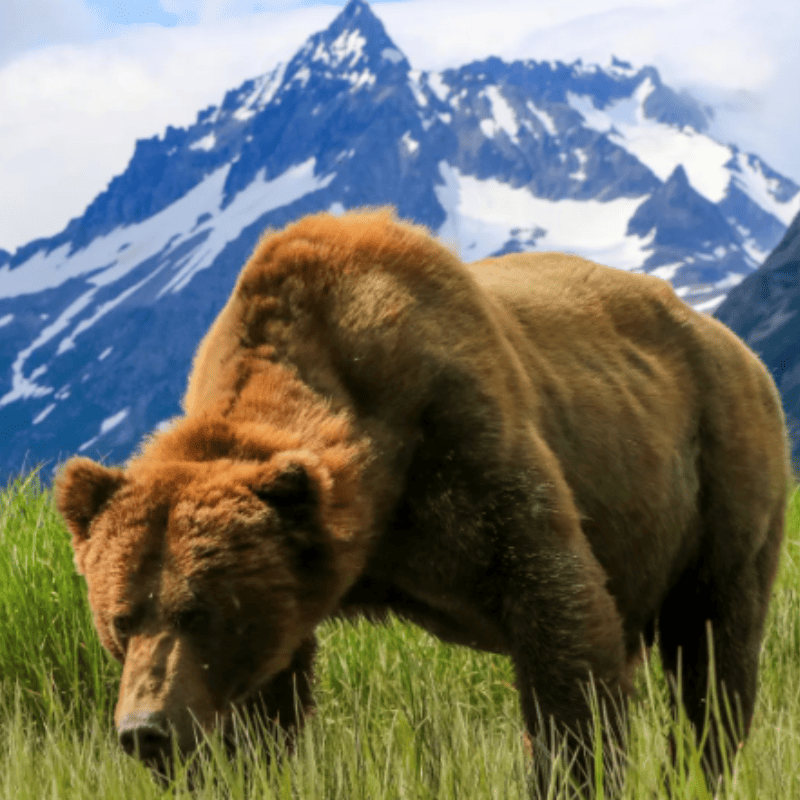
For those interested in a bear that’s not quite Canadian but closely related, the Kodiak brown bear, found in Alaska, is one of the largest bear species, these creatures sharing their lineage with grizzlies.
Where to Find Bears in Canada?
Iconic Destinations for the Ultimate Bear-Watching Experience
From Canada’s misty coastal rainforests to Arctic tundras, each region offers a unique opportunity to observe these incredible creatures in their native habitats. Whether you dream of seeing grizzlies swiping at salmon, spirit bears gliding through ancient forests, or polar bears prowling across icy shores, there is a perfect place—and perfect moment—to witness it.
Perhaps the most popular bear species are the grizzlies. According to The Canadian Encyclopedia “Three-quarters of Canada’s grizzly bears are found in B.C. and the Yukon. There are also grizzly populations in Alberta, the Northwest Territories, and Nunavut.”
The Great Bear Rainforest, British Columbia
A sprawling temperate rainforest larger than Ireland, the Great Bear Rainforest is a magical land of towering cedars, rushing rivers, and secluded estuaries—a place of wonder—where grizzlies and black bears wade through streams and eagles soar above ancient trees.
Located along the central and northern coast of British Columbia, it is often referred to as the “Amazon of the North,” and its 21 million acres are somewhat special, as aside from Princess Royal Island, located just 500km north of Vancouver, this is only other place on earth where the rare spirit bear is found.
Klemtu, British Columbia
Guided tours from Spirit Bear Lodge, operated by the Kitasoo/Xai’xais Nation, offer unparalleled opportunities to view grizzlies and Canada’s more elusive bear.
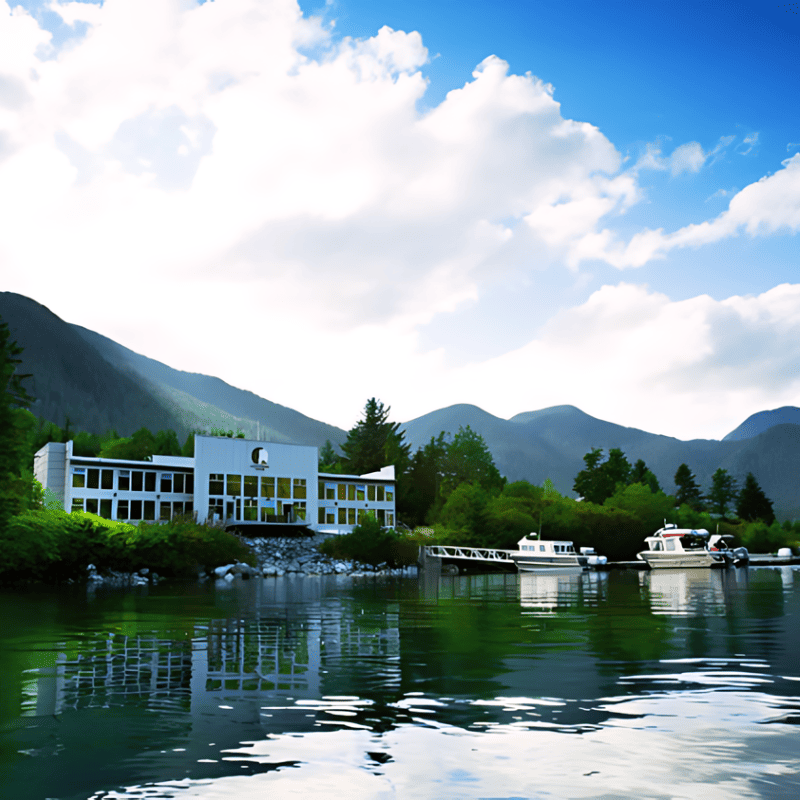
A veritable bear kingdom, this remote backcountry is teeming with life. As one visitor recounted, “We saw over 20 [bears] in total: grizzlies, including a sow with triplets, black bears climbing wild apple trees feasting on the grape-sized crab apples, and a lovely spirit bear who entertained us for over 3 hours as she fished for salmon, aware of us but content to go about its business — fattening for the long winter hibernation.“
Knight Inlet and Glendale Cove, British Columbia
A glacial fjord located in the southern part of the Great Bear Rainforest, and stretching 100 kilometres into the coastal mountains, Knight Inlet is one of Canada’s premier grizzly bear habitats.
We recommend three to four night stays at Knight Inlet Lodge, a floating eco-retreat renowned for its sustainable wildlife tours. Depending on the time of year, you can view the bears by boat or from a sheltered viewing platform, as they fish, play, and teach their cubs to hunt.
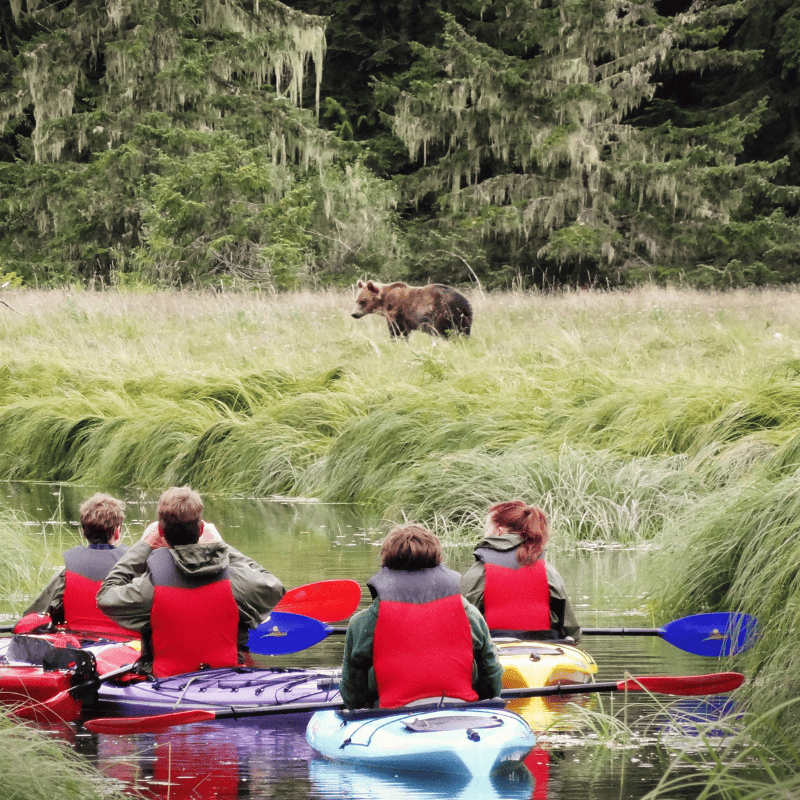
Whether on land or water the encounters here are anything but what you would expect, as Doug McKinlay recounts in National Geographic, “A hush falls over the boats. In front of us, a mother and two cubs are foraging among the barnacle-covered rocks of the intertidal zone. Despite being among several kayaks, I feel as if I’m alone, just me, the bears and this vast rainforest.“
Bella Coola, Tweedsmuir Provincial Park
Nestled in the Cariboo, in one of the most spectacular wilderness areas on Earth, Bella Coola is where the towering Coast Range mountains meet the Pacific Ocean. This remote, untamed landscape is defined by deep fjords, ancient forests, soaring peaks, and sprawling glaciers and at the heart of this wilderness lies Tweedsmuir Park Lodge. The perfect base from which to explore the natural wonders of Tweedsmuir Provincial Park, British Columbia’s largest protected area, is right next door to the Great Bear Rainforest.
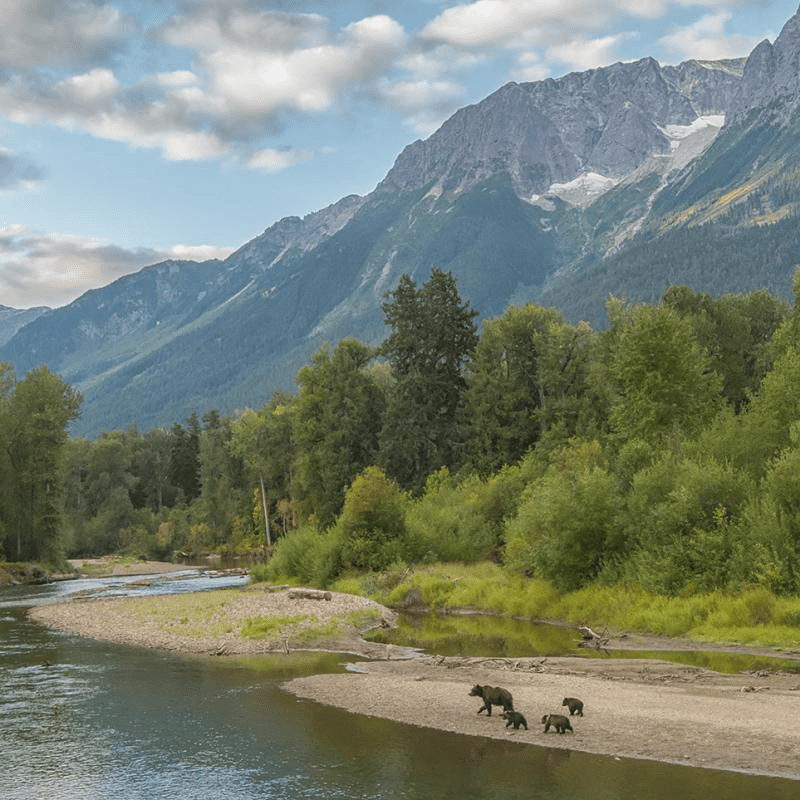
Guided river drifts along the Atnarko River offer the chance to observe grizzly bears in their natural habitat, while expert-led excursions teach visitors the art of tracking wildlife through the vast rainforest. Beyond the bears, ancient stone carvings, towering totem poles, and hidden cultural sites tell the stories of the Nuxalk Nation, whose deep connection to the land stretches back thousands of years.
Broughton Archipelago, British Columbia
Nestled in the maze of islets and inlets off Vancouver Island’s northeast coast, the Broughton Archipelago, dubbed BC’s Narnia, is a haven for grizzlies and black bears. It is here that rivers run red with salmon in the autumn, and bears feast in the intertidal zones.
Close to the Great Bear Rainforest, stay at Farewell Harbour Lodge, a luxurious eco-retreat owned by the McGrady and Brockway families, the private retreat framed by panoramic windows that overlook the water.
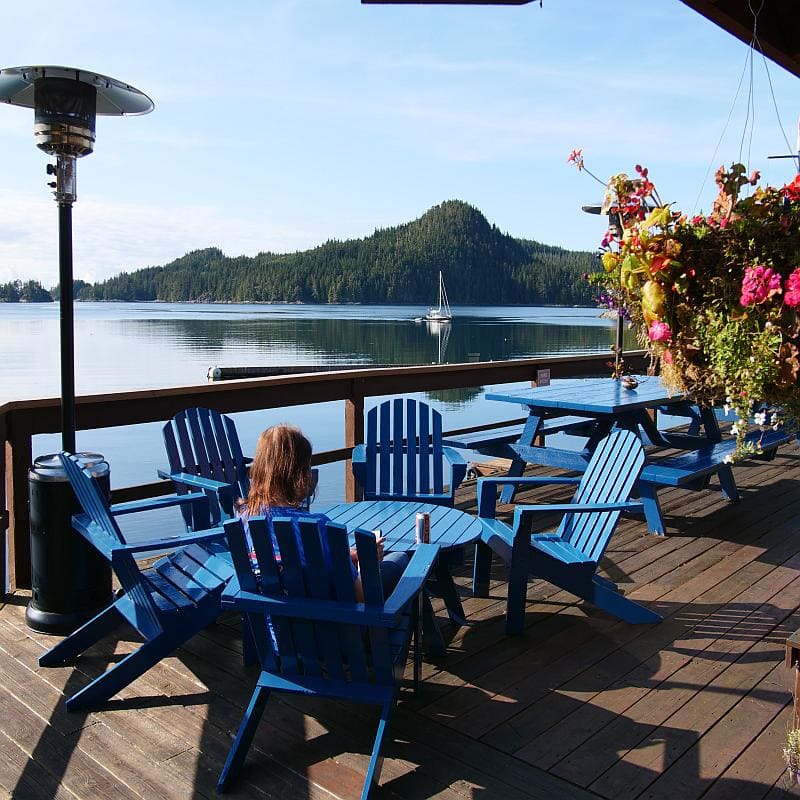
As our very own Canada expert, Jeanette Dembrey recounts in her travel review, “We were very much hoping to spot grizzlies, and again, it wasn’t long before we were rewarded. A light-brown female grizzly appeared along the rocky shoreline, and, later, a dark-furred mother joined us with her two tiny cubs. Watching the cubs play and mimic their mother was the kind of experience that brings nature’s wonders to life, a rare glimpse into the tender side of the wild.“
Toba Inlet, Sunshine Coast, British Columbia
Tucked along the Sunshine Coast, Toba Inlet offers a more intimate bear-watching experience. This remote, fjord-lined wilderness is known for its stunning turquoise waters and abundant wildlife.
Stay at the award-winning Klahoose Wilderness Resort, an indigenous-owned eco-lodge where guides from the Klahoose Nation share cultural stories and lead grizzly bear tours to the riverbanks. A place where nature and culture intertwine—grizzlies hunt salmon beneath cedar boughs while stories of the land echo through the trees.
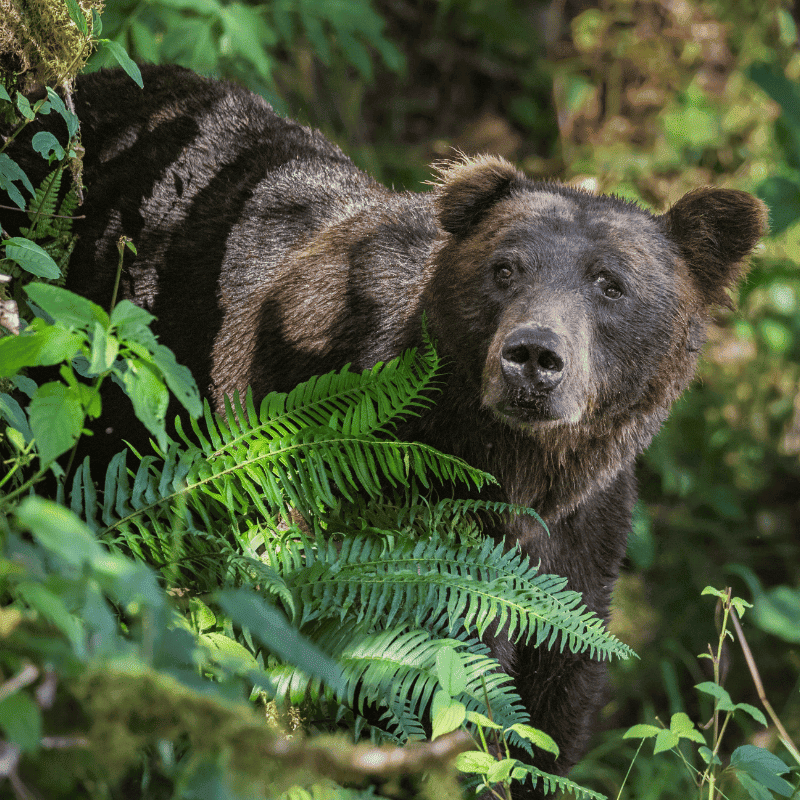
Kathryn Romeyn shares her experience of a bear safari at off-grid paradise in Travel & Leisure magazine: “Finally, we heard loud splashing from upriver—a mama and her big baby were bounding around, trying to catch fish. She then started digging in a pile of logs, dust flying. They walked across the logs and climbed, mama’s nose in the air sniffing, on high alert—there was a dangerous male in the area, it seemed, and we spotted him later.“
Haida Gwaii, British Columbia
Often called the “Galápagos of the North,” Haida Gwaii is an archipelago rich in Indigenous culture and rare wildlife. Although it lacks large bear populations, it is part of the greater bear ecosystem of northern BC, and sightings of black bears are possible. In fact, this group of islands is home to a unique subspecies of black bear known as the Haida Gwaii black bear (Ursus americanus carlottae).
Providing you with a deeper understanding of the Indigenous connection to nature, visits here are an opportunity to immerse yourself in the stories of these magnificent creatures as powerful spiritual beings. Choose from land-based holidays at Haida House and small ship adventure cruises through the islands.
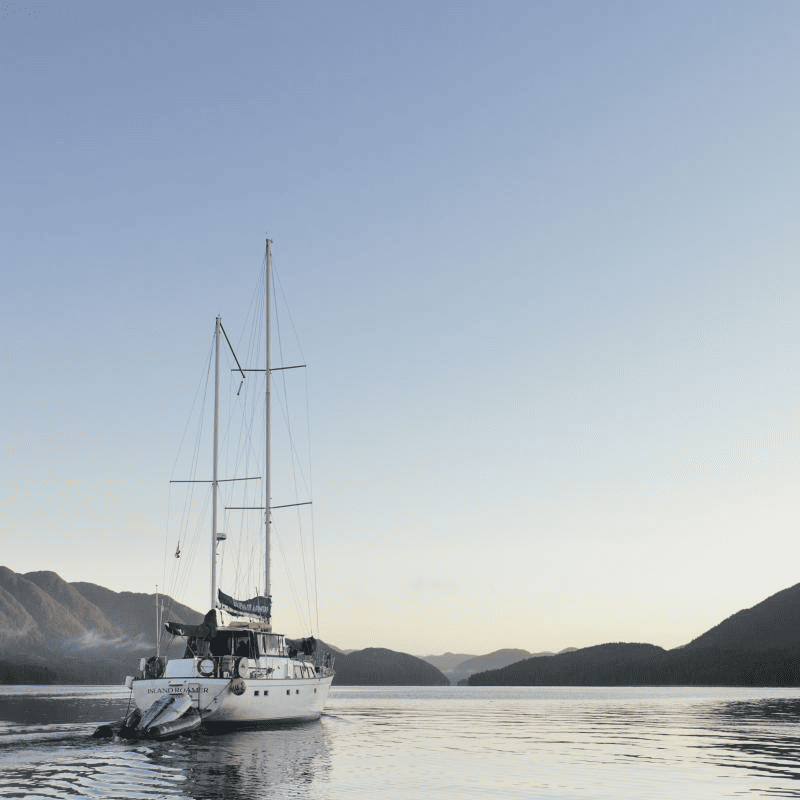
Climb aboard the Island Roamer a custom 68-foot ketch, launched in 1983. The boat’s features 8 private cabins (double occupancy), 3 heads with hot showers, a large comfortable lounge with an extensive library, a well-equipped galley, and on deck a large covered seating area for watching wildlife.
The Untamed Wilderness of Quebec: Black Bear Country
In the heart of the Gaspé Peninsula, Matane Wildlife Reserve is a hidden gem known for its flourishing black bear population. Thick boreal forests and meandering rivers create a rich habitat where they forage and raise their young.
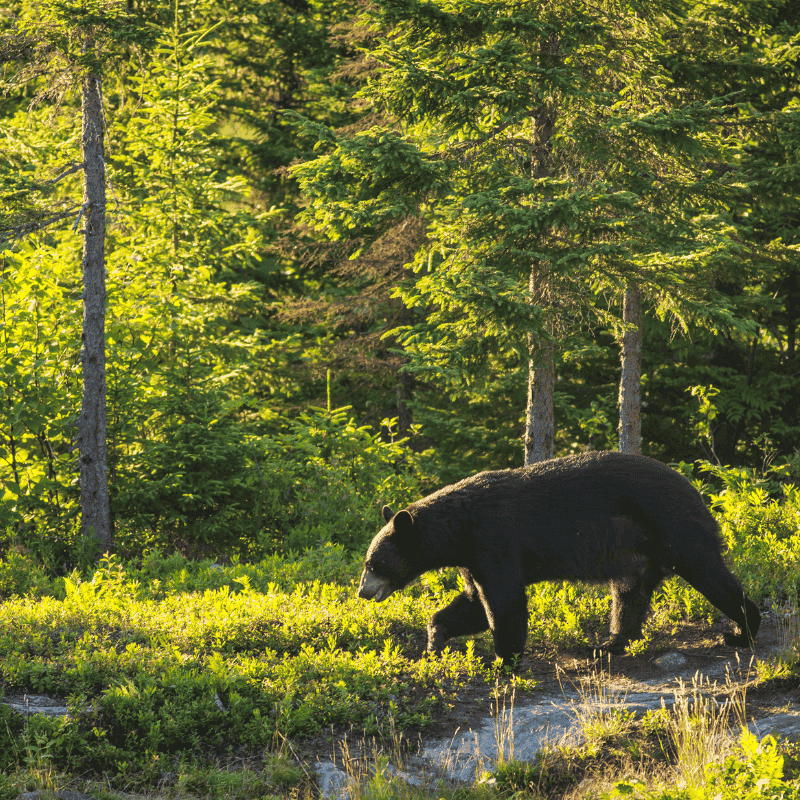
Guided observation tours provide a chance to watch bears from a safe distance and experience the thrill of seeing a black bear emerge from the trees, backlit by golden twilight, a moment that stays with you forever.
The Polar Bear Realms of Manitoba: Arctic Giants on Ice
On the western shores of Hudson Bay lies Churchill. A place synonymous with the Ice Kings, this quaint northern town is nicknamed the “Polar Bear Capital of the World.” Every autumn, hundreds of bears gather here, waiting for the sea ice to form so they can hunt seals. The flat, stark tundra offers one of the world’s most reliable opportunities for polar bear sightings.
Decades-long polar bear guide, Emri Canvin, who lives in Churchill comments on his experience: “Here, in the sub-Arctic wilds, you witness nature’s most spellbinding performances—where the aurora shimmers above, and the mighty polar bear prowls the same snow-laden ground beneath.“
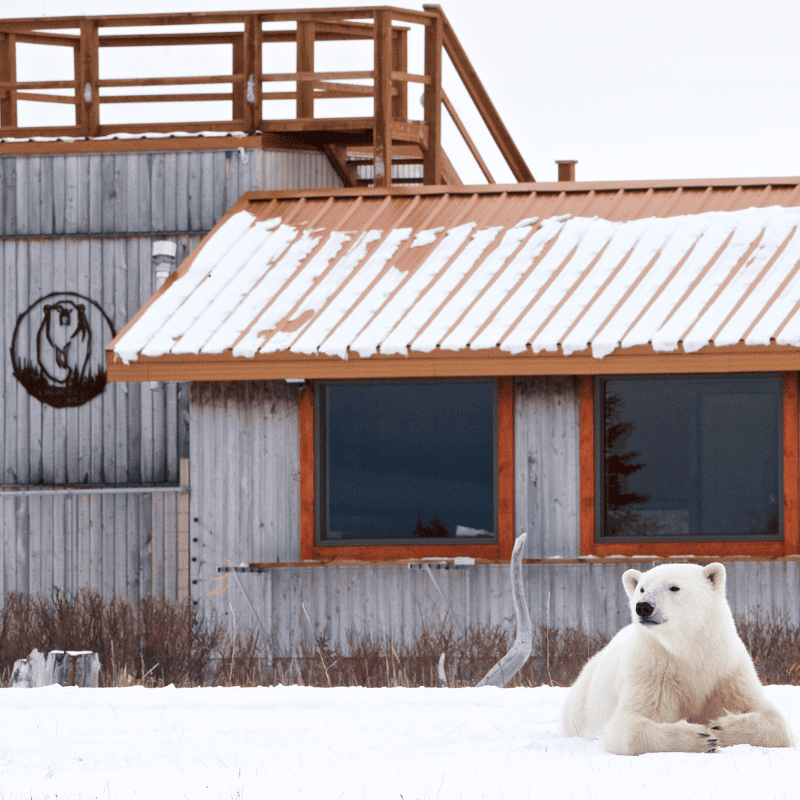
Tundra buggies—large, all-terrain vehicles with heated interiors—provide safe, close-up encounters, and the opportunity to see polar bears emerging from the fog and investigating the vehicles is a surreal experience.
For a more immersive stay, consider Nanuk Polar Bear Lodge, Dymond Lake Lodge, Seal River Heritage Lodge, or the Tundra Buggy Lodge, where guests sleep in mobile lodges on the tundra.
Arctic Frontiers of the Northwest Passage: Polar Bear Viewing
The far north of Canada, where glaciers carve through granite cliffs and the sun hangs low on the horizon, is the ultimate frontier for polar bear sightings. These remote regions are part of the polar bear’s natural hunting grounds, where sea ice is both their home and preys’ territory.
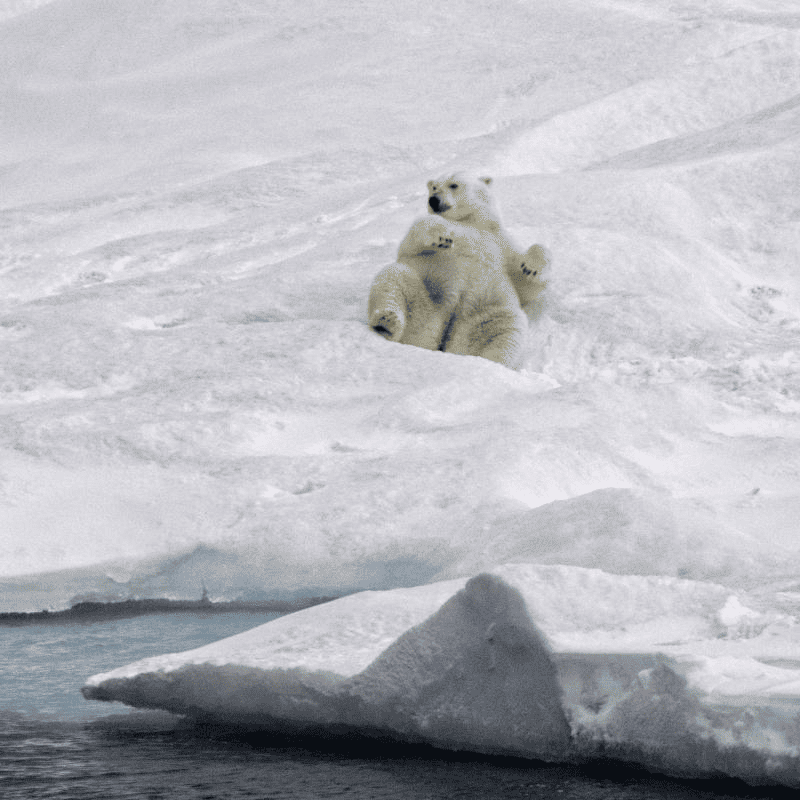
Expedition cruises through the Northwest Passage provide an extraordinary way to witness polar bears with ships passing by Baffin Bay, the Davis Strait, the Lancaster Sound, and Beechey Island. Only a privileged few will ever experience the sight of a polar bear leaping from floe to floe in search of seals, these giant ice kings framed by the endless Arctic sky.

Another prime location is Kodiak Island, home to the distinct Kodiak bear. The island’s remote wilderness provides a unique setting for observing these giants as they forage along the coastline and rivers.
Tour Coastal Katmai, this region of the Katmai National Park and Preserve bordering the Pacific Ocean. Small boats provide access to areas that are off the main tourist track; with the opportunity to step ashore and visit one of the world’s most abundant grizzly bear habitats.
Beyond Canada’s Iconic Bear-Viewing Lodges
Tofino
Located on Vancouver Island’s rugged west coast, Tofino is best known for its wild beaches and world-class surfing, but the surrounding Clayoquot Sound is also prime black bear territory. Here, bears emerge at low tide along the rocky shorelines, flipping over boulders in search of crabs and shellfish. A boat tour offers the best vantage point, allowing you to watch these coastal foragers undisturbed while soaking up the spectacular scenery.
Telegraph Cove
Further north on Vancouver Island, Telegraph Cove is famous for its orca-watching opportunities, but it’s also an excellent place to see black bears roaming the shoreline. The charming boardwalk village itself is a historic gem, offering a unique blend of wildlife, heritage, and coastal beauty.
Whistler
For those heading to the mountains, Whistler is home to a thriving population of black bears. Guided 4×4 bear tours take visitors deep into the forests surrounding the resort, where experienced guides track bear activity and share insights into their behaviour.
When is the Best Time to See Bears in Canada?
The best time for bear viewing in Canada varies by region and species, but generally, spring (May–July) is ideal for spotting bears emerging from hibernation along with their newborn cubs, while late summer and autumn (August–October) offer the most dramatic encounters as bears gather at rivers for the salmon run.
British Columbia: The Grizzly & Black Bear Heartland
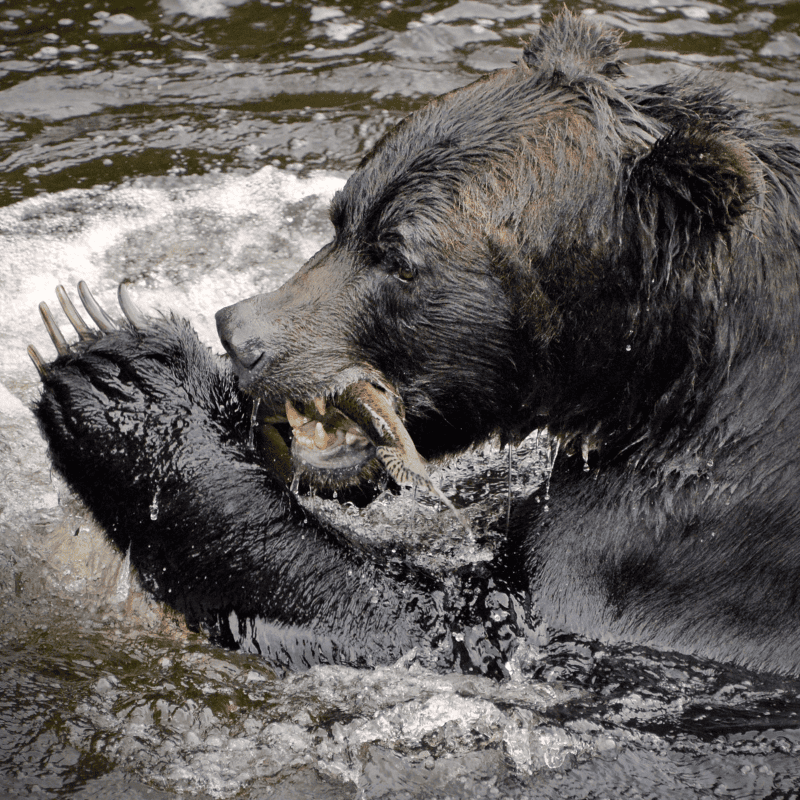
From Knight Inlet, Glendale Cove, and Bella Coola to Toba Inlet and the Broughton Archipelago, grizzly and black bears begin appearing in May, foraging along estuaries and shorelines. August to October is peak season, with grizzlies fishing for salmon in the rivers, best viewed on guided river drifts or from viewing platforms. Over in Tofino and Telegraph Cove, black bears can be seen along the shore flipping rocks for crabs, especially in spring and early summer, while Haida Gwaii’s unique Haida Gwaii black bears, are best spotted in early autumn.
The Interior: Remote Wilderness Encounters
The Cariboo and Chilcotin Mountains offer black and grizzly sightings from June to October, with the best chances in late summer as bears move to lower elevations. Tweedsmuir Provincial Park is exceptional in September and October, when grizzlies gather along the Atnarko River, making it one of Canada’s top bear-watching locations.
The Arctic: Polar Bears in the Wild
Polar bears are best seen in Manitoba (Churchill, Seal River, Nanuk Lodge) from October to November, when they congregate along Hudson Bay, waiting for the ice to form. July and August also offer summer sightings, with bears wandering the tundra and coastline, their stark white fur contrasting sharply against the wildflowers. Further north, Baffin Bay and the Northwest Passage are best explored by expedition cruise from July to September, with polar bears spotted hunting along the ice edge.
Québec: Boreal Forest
The dense boreal forests and meandering rivers of the Gaspé Peninsula are best visited from June to September, as during this time Black bears will be at their most active in preparation for hibernation.
Alaska: Katmai National Park & Kodiak Island
For those venturing further afield, peak viewing in Alaska’s Katmai National Park is best enjoyed from July to September. On Kodiak Island, late summer offers incredible opportunities to watch bears feasting on salmon.
What to Pack for Bear-Watching Adventures?
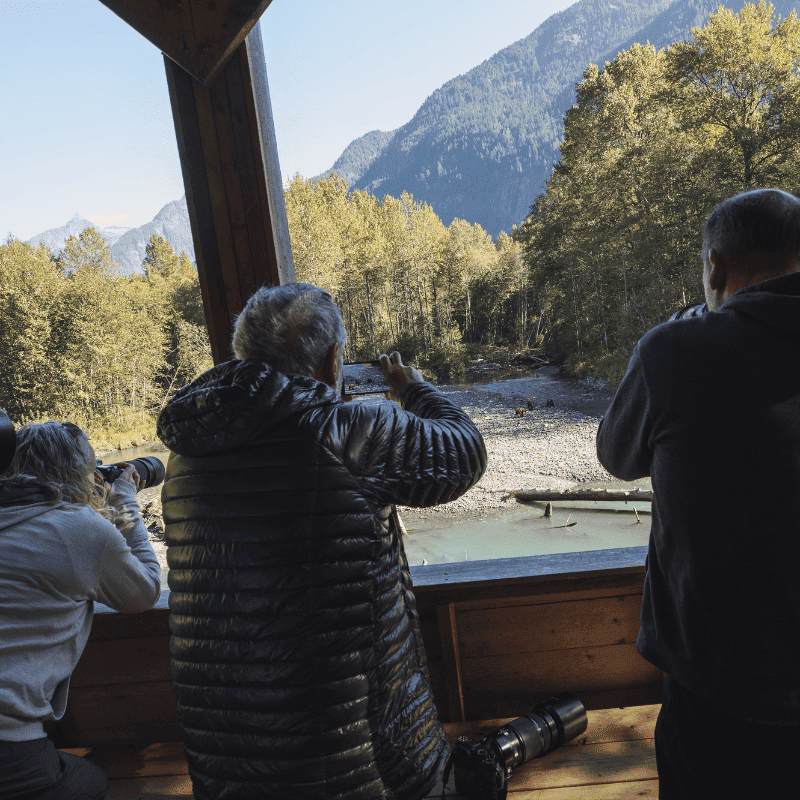
- Layered Clothing: Temperatures can change quickly, so bring thermal layers, waterproof outerwear, and a warm hat and gloves.
- Sturdy Footwear: Waterproof hiking boots with good grip are essential for walking on uneven terrain.
- Binoculars: Crucial for observing bears from a safe distance.
- Camera with a Telephoto Lens: Capture stunning close-ups without disturbing the bears.
- Insect Repellent: Particularly important during summer months in forested areas.
How to Stay Safe When Viewing Bears?
While observing bears in their natural habitats is exhilarating, it’s crucial to prioritise safety and respect for these wild animals:
- Maintain Distance: Always observe bears from a safe distance. Approaching too closely can provoke aggressive behaviour and disrupt their natural activities.
- Never Feed Bears: Feeding bears can lead to habituation, where bears associate humans with food. This can result in dangerous encounters and often necessitates the removal of the bear from the area, sometimes leading to euthanasia.
- Store Food Properly: When in bear country, ensure all food and scented items are securely stored in bear-proof containers to prevent attracting bears to human habitats.
- Travel in Groups: Bears are less likely to approach groups of people. Making noise while hiking can also alert bears to your presence, reducing surprise encounters.
- Carry Bear Spray: In areas known for bear activity, carrying bear spray and knowing how to use it can be an effective deterrent in case of an encounter.
How can we be Respectful to Indigenous Communities?
A bear-viewing journey in Canada offers more than just the chance to see these majestic animals; it’s an opportunity to connect deeply with nature and appreciate the rich cultural tapestries of the regions as they are deeply woven into the cultural fabric of Indigenous communities across Canada.
Just as the Spirit bear is sacred to the Gitga’at Nation of British Columbia, similarly, the Inuit view polar bears as teachers and providers, their survival skills a guide for life in the Arctic.
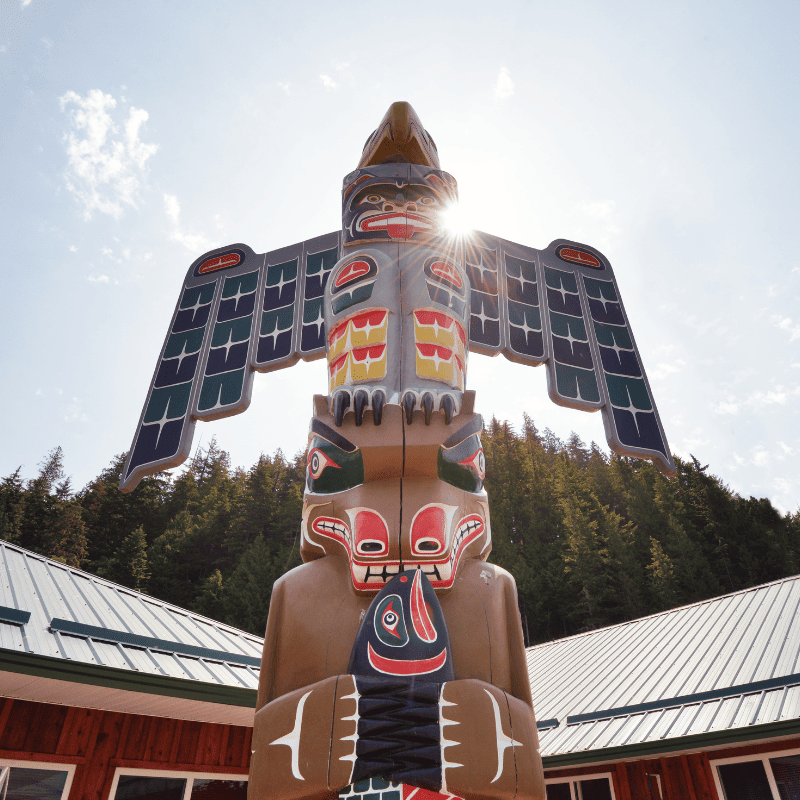
When you embark on a bear-watching adventure, you’re stepping into ancient territories where bears have roamed long before humans arrived. Responsible travel means supporting local Indigenous-led tours and conservation efforts that ensure bears and their habitats are protected for generations to come.
As the Haida proverb goes: “We do not inherit the Earth from our ancestors; we borrow it from our children.”
Are you ready to step into Canada’s bear country? Call our specialists on 020 8776 8709 or email us at Canada@frontier-travel.co.uk.


